
Talayotic Period ENG
The power of the Talayots, a symbol of a society.
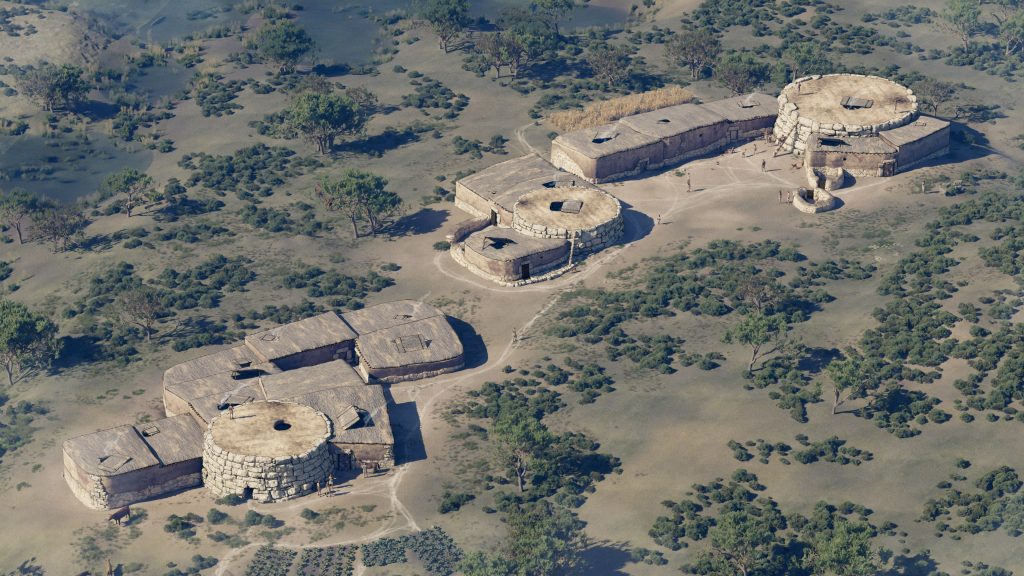
The lives of the inhabitants of Son Fornés were formed around large circular structures of Cyclopean ashlars, called Talayots, symbols of cohesion and union of the community. In addition, the resources offered by these lands made Son Fornés an ideal place for agricultural and livestock self-sufficiency.

Talayot 1
This Talayot is the largest of the three. It was used for cutting and storing the meat that was then distributed to all members of the community of Son Fornés. Occasionally communal banquets were held here.

The Talayotic Dwellings
In this period, the dwellings were characterized by being built with a large stone plinth, while the upper part of the walls was made with a mixture of compacted soil. The accesses, in general, were framed with large cyclopean blocks.
Balearic Period
A hierarchical society.
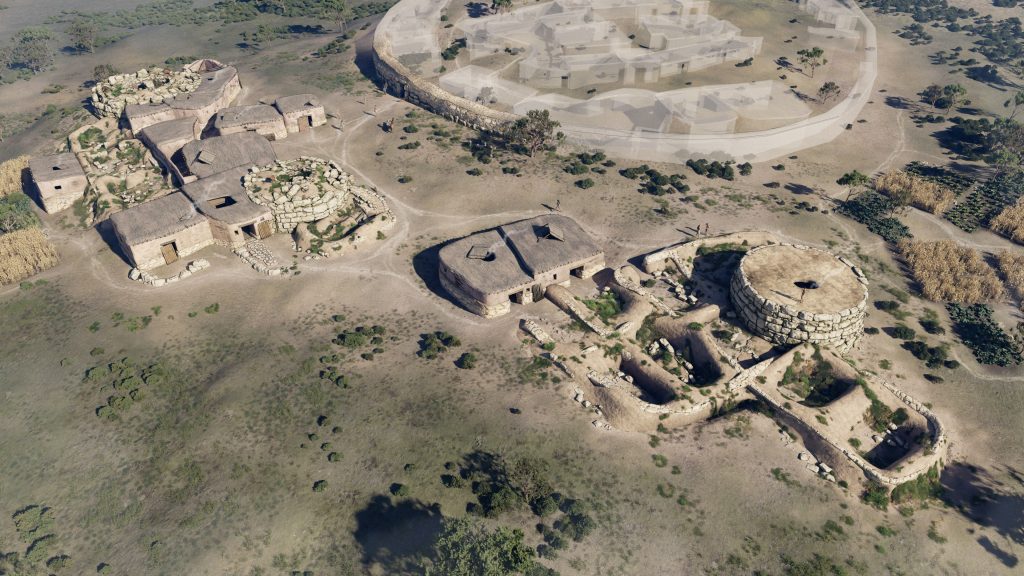
The expansion of great powerhouses such as Rome and Carthage altered the lives of the inhabitants of Son Fornés, as war and might defined this era, leading to increased social and economic stratification and thus elevating the role of the male figure. The construction of sanctuaries as principal sacred spaces may be associated with the emergence of some type of priestly caste or hierarchy.
Classic Period
The unstoppable advance of Rome, a new era of transformation.
The military occupation of Rome in the Balearic Islands must be framed within the process of expansion of the powerful Roman Empire, which responds to both political and economic reasons. The islands, besides having a significant strategic position, were a passageway to reach Hispania. This caused an alteration of the culture and society of Son Fornés, although its inhabitants continued to maintain many of the traditions of their ancestors.
Our Team
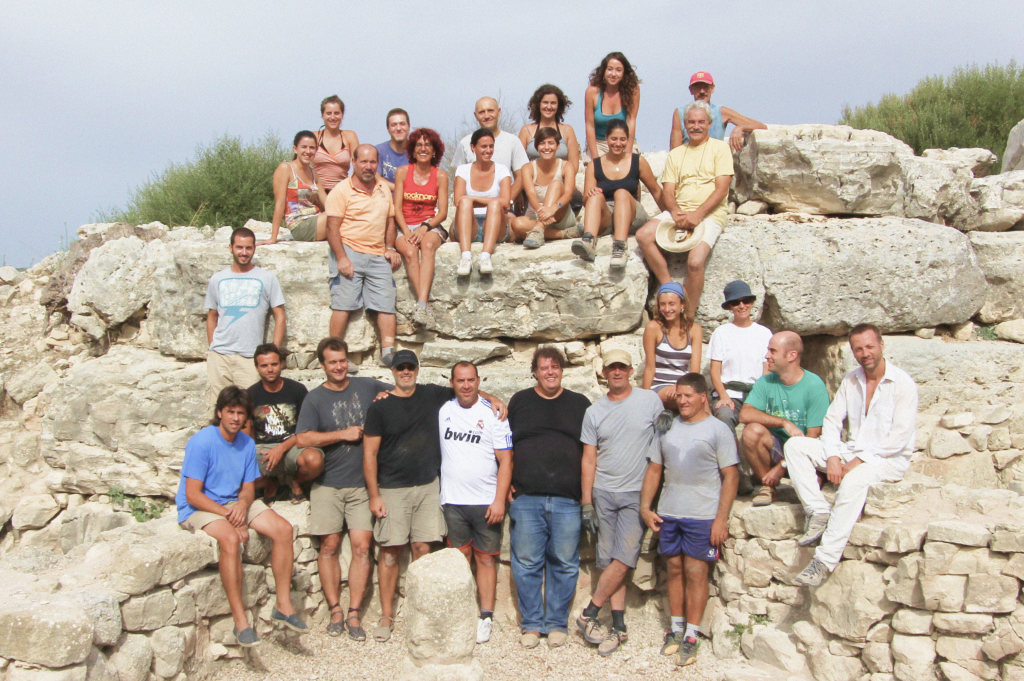
The team at the Son Fornès site, coordinated by the Autonomous University of Barcelona, focuses its activity on the study and conservation of this important archaeological site. Through systematic excavation techniques, they analyze the structures and artifacts found to better understand the societies that lived here. Each discovery contributes to the scientific knowledge about the cultural, economic, and social practices of these ancient communities. Thus, their work provides a valuable contribution to archaeology and the understanding of human history.
Audiovisual
Discover here the evolution of the site, from its period of splendor during the Talayotic era to the new era of transformations that came with the advance of Rome.